Massive Vatican City-Sized Coral Reef and 28 New Species Discovered in Deep Sea Off Argentina
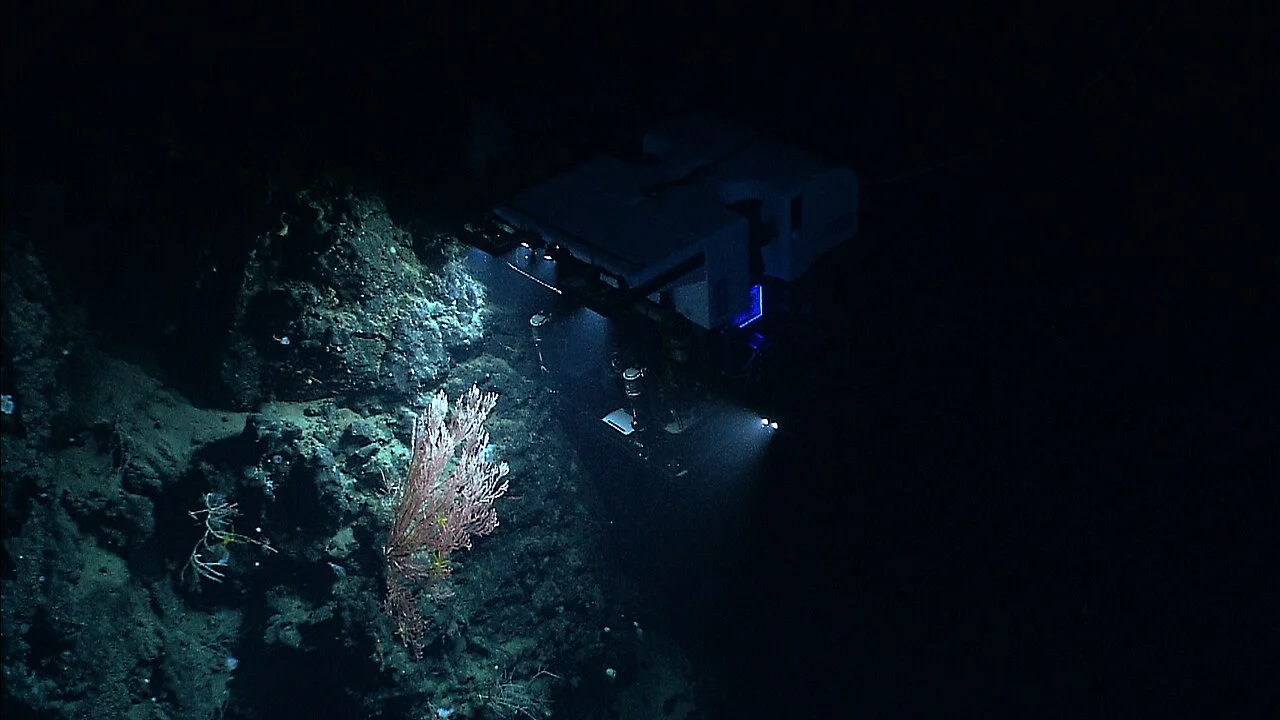
Deep sea cold-water coral habitat. NOAA Office of Ocean Exploration and Research (public domain).
Scientists aboard the Schmidt Ocean Institute's R/V Falkor (too) have discovered a cold-water coral reef the size of Vatican City, 28 potential new species, and a rare giant phantom jellyfish off Argentina's coast — reshaping our understanding of the South Atlantic deep sea.
Scientists Discover Vatican City-Sized Coral Reef and 28 New Species Off Argentina
In one of the most significant deep-sea discoveries of 2026, an international team of scientists aboard the Schmidt Ocean Institute's research vessel Falkor (too) has uncovered a stunning underwater world off the coast of Argentina — including the largest known cold-water coral reef of its kind, nearly 30 potential new species, and rare footage of a giant phantom jellyfish.
The discoveries, made during a comprehensive expedition spanning the entire length of Argentina's coastline from Buenos Aires to Tierra del Fuego, are reshaping scientific understanding of the South Atlantic's deep-sea ecosystems.
"We were not expecting to see this level of biodiversity in the Argentine deep sea, and are so excited to see it teeming with life," said Dr. María Emilia Bravo of the University of Buenos Aires and CONICET, the expedition's chief scientist. "We opened a window into our country's biodiversity only to find there are so many more windows left to be opened."
The Vatican City-Sized Coral Reef
The expedition's flagship discovery is a massive cold-water coral reef built by a stony coral species called Bathelia candida. One single coral mound covers approximately 0.4 square kilometers — an area nearly the size of Vatican City — and was found 600 kilometers (373 miles) further south than the species' previously known range.
Unlike most Atlantic cold-water reefs dominated by Lophelia pertusa, this reef is built by a rare pink, orange, and white coral that scientists describe as one of the most vibrant deep-sea environments they've ever encountered.
"It still amazes me when we can discover something this size still on our planet. It goes to show you how much more mapping there is to be done," said Erik Cordes, professor of biology at Temple University, whose team mapped the reef across a 900-kilometer (560-mile) stretch of Argentina's territorial waters at depths of around 1,000 meters (3,300 feet).
The reef qualifies as a Vulnerable Marine Ecosystem (VME) — a designation that recognizes its slow growth and poor recovery potential from human impacts like bottom trawling or oil and gas exploration.
28 Suspected New Species
Scientists identified approximately 28 suspected new species during the expedition, including:
- Deep-sea worms — previously unknown polychaete species thriving in cold seep environments
- Cold-water corals — new varieties adapted to the extreme pressures and temperatures of the deep Atlantic
- Sea urchins and sea snails — unusual species collected from coral substrates and seamounts
- Sea anemones — found attached to the newly discovered coral mounds
Additional reports from similar expeditions in the region suggest the total number of new species awaiting formal description could exceed 40.
Rare Giant Phantom Jellyfish Filmed at Depth
One of the most visually striking moments of the expedition came when the team's ROV SuBastian filmed a rare giant phantom jellyfish (Stygiomedusa gigantea) at 250 meters (820 feet) depth. This enigmatic creature, one of the ocean's largest invertebrates, has a bell up to 1 meter (3.3 feet) in diameter and four oral arms that can stretch up to 10 meters (33 feet) — as long as a school bus.
Remarkably, the footage showed juvenile fish sheltering around the jellyfish's bell, a symbiotic relationship that scientists are still working to understand. Unlike stinging jellyfish, the phantom jellyfish uses its long arms to sweep plankton and small fish toward its mouth.
Argentina's First Deep-Sea Whale Fall
The expedition also documented Argentina's first recorded deep-water whale fall — the carcass of a deceased whale that had sunk to the seafloor at approximately 3,890 meters (2.4 miles) depth in the Argentine Basin. The whale bones, now decades old, are in what scientists call the "reef phase," providing a hard substrate that hosts octopuses, sharks, crabs, and specialized Osedax bone-eating worms.
Whale falls create temporary ecosystems that can sustain life for decades, cycling nutrients back into the deep-sea food web.
Cold Seeps and Bubblegum Coral Gardens
Beyond the coral reef, the team discovered and mapped an active cold seep zone spanning approximately 1 square kilometer — an area where methane and chemical compounds leak from the seafloor, fueling unique chemosynthetic ecosystems. Clam beds of Archivesica and Calyptogena species were found thriving in these conditions, with squat lobsters observed picking through the shell beds at 619 meters depth.
Near Tierra del Fuego, in the Malvinas Trough at roughly 3,000 meters depth, the team documented ancient Bubblegum coral gardens (Paragorgia arborea) interspersed with massive deep-sea sponges.
Human Impact Even at Depth
Despite the remoteness of these ecosystems, the expedition documented signs of human activity even at extreme depths. Fishing nets, garbage bags, and even a near-pristine VHS tape with Korean labeling were observed on the seafloor — a stark reminder that plastic pollution reaches the most remote corners of our planet, where cold, dark conditions slow decay for decades or longer.
"We collected an unprecedented number of chemical, physical, and biological samples that will be used to understand connections in our waters for years to come. These samples represent a unique opportunity to understand not only how extraordinary these extreme ecosystems are, but also how vulnerable they can be," said Dr. Melisa Fernández Severini, a marine biologist at the Instituto Argentino de Oceanografía.
What This Means for Divers and Ocean Enthusiasts
While these discoveries lie far beyond recreational diving depths, they hold profound significance for the global diving community. Every dive, whether on a shallow coral reef in Indonesia or a kelp forest in California, is connected to the deep sea through ocean currents, nutrient cycles, and migrating marine life.
The discovery also underscores how much of our ocean remains unexplored. As Dr. Jyotika Virmani, Schmidt Ocean Institute's Executive Director, noted: "With every expedition to the deep sea, we find the ocean is full of life — as much as we see on land, and perhaps more because the ocean contains 98 percent of the living space on this planet."
Conservation Implications
The findings come at a critical time. Some of the newly discovered seep areas overlap with existing oil and gas exploration blocks. Detailed maps of dense animal communities can guide future decisions about fishing boundaries, shipping lanes, and extraction permits.
Scientists are also testing deep-sea restoration techniques, including 3D-printed artificial corals made from cement and crushed coral skeletons, to help jump-start coral growth in damaged areas.
Looking Ahead
With only 10% of the ocean explored, discoveres like this remind us that the deep sea holds countless secrets still waiting to be revealed. The Schmidt Ocean Institute plans follow-up expeditions, and scientists are now processing the unprecedented collection of samples that will keep researchers busy for years to come.
All images in this article © Schmidt Ocean Institute / ROV SuBastian (CC BY-NC-SA 4.0) and NOAA Office of Ocean Exploration and Research (public domain).
Written by GeckoDive Team
The official GeckoDive team sharing diving knowledge, gear reviews, and destination guides.