Largest-Ever Decompression Sickness Study: 10 Surprising Findings Every Diver Should Know
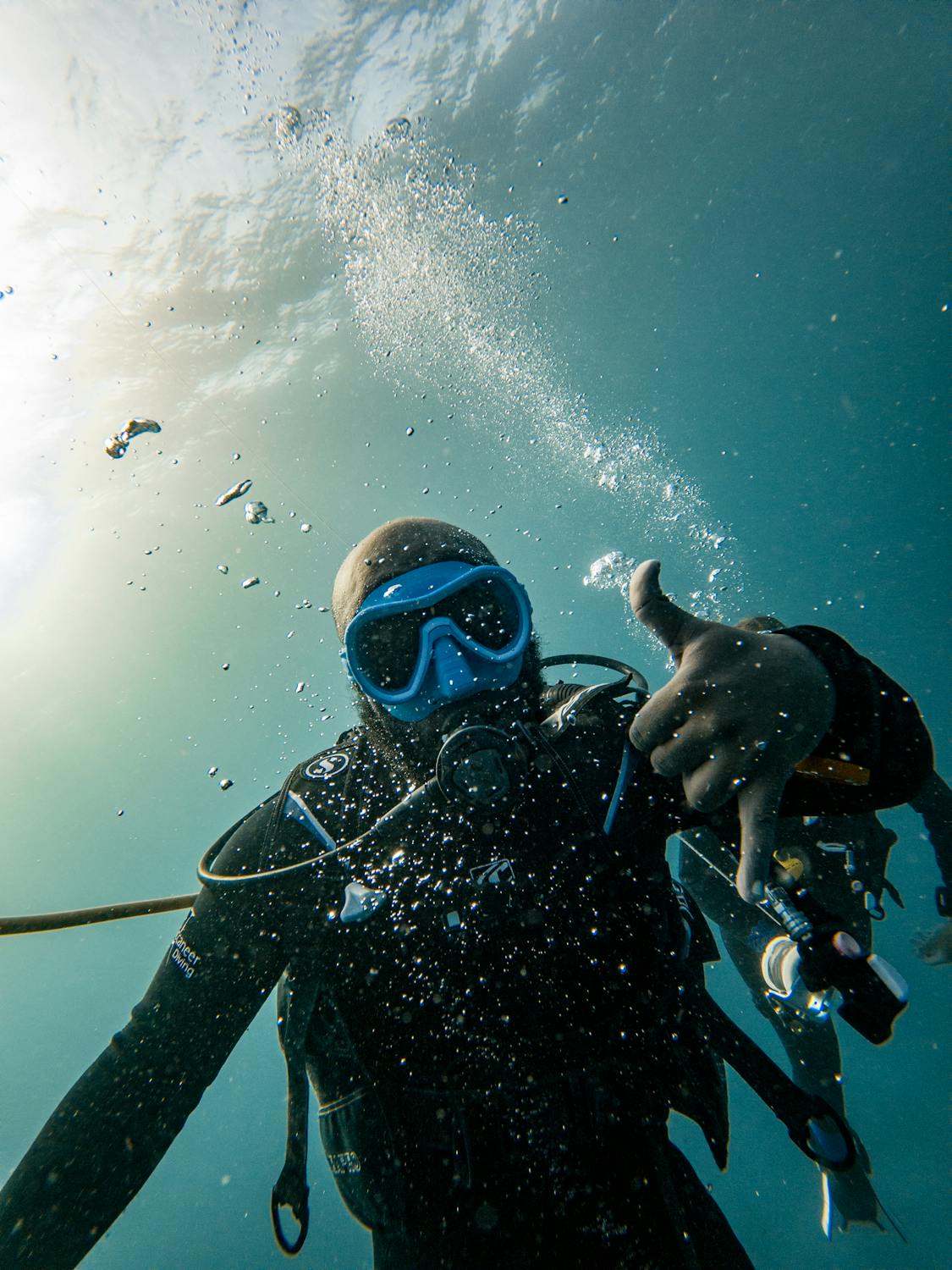
Diver giving the OK signal — a universal diving safety gesture. Photo: Pexels / Carlos Jamaica
DAN Europe analyzed nearly 130,000 real-world dive records in the largest-ever study on decompression sickness. The results challenge decades of conventional wisdom — from BMI and gender risk to thermal comfort and pre-dive fatigue.
For decades, divers have relied on dive tables and algorithms to predict what should happen after a given hyperbaric exposure. And while those tools are extremely useful, they are not perfect. That is why divers have long used the term undeserved decompression sickness for cases that still happened even when the tables and the computers were followed.
But what if those cases are not mysterious at all? What if the model simply fails to account for all the different factors that increase the risk of decompression sickness (DCS)?
A massive new study from DAN (Divers Alert Network) Europe has analyzed nearly 130,000 dive records — the largest dataset of its kind — and the results are challenging some of our most fundamental beliefs about DCS risk. Here is what every diver needs to know.
How Decompression Sickness Works
At depth, your body absorbs more nitrogen from the gas you breathe. This nitrogen gets dissolved into your blood and tissues. As you ascend, the pressure is reduced, and the nitrogen slowly starts leaving your body. Think of it like a soda can — the drink inside has CO₂ dissolved in it. A slow, controlled ascent is like slowly opening the can. A quick ascent is like popping open a can that has been shaken. Bubbles of nitrogen form in your body without enough time to leave, getting trapped in your tissues and causing problems ranging from rash and joint pain to severe neurological damage.
We first learned about decompression sickness not from scuba divers, but from bridge construction in the 1800s. Men working underwater in pressurized chambers called caissons would get very sick after returning to the surface. During the construction of the Brooklyn Bridge, Dr. Andrew Smith documented 110 cases of what he called caisson disease. The pain was so severe that sufferers would hunch over — a posture that led to the nickname "the bends," a dark joke inspired by the fashionable Grecian bend walk of Victorian-era ladies.
Now, researchers from DAN Europe have brought our understanding of DCS into the 21st century with data that might change how we think about dive safety forever.
The Study That Changes Everything
Researchers analyzed a huge dataset collected from thousands of divers around the world to determine which factors are the strongest predictors of DCS. They broke the findings down into three key areas: body (biological factors you can't easily change), behavior (how you dive and how you feel), and dive configuration (technical aspects of the dive).
Here are the most surprising findings.
1. Lower BMI, Higher Risk (The U-Curve)
For years, conventional wisdom held that because nitrogen dissolves in fat more easily than in other tissues, people with higher body fat percentages have a higher DCS risk — a larger reservoir for nitrogen bubbles.
This study turned that assumption on its head.
The data showed the opposite: the lower the BMI, the higher the risk of DCS, and this held true all the way down to severely obese individuals. The relationship appears to follow a U-curve. According to the study authors, this finding alone questions some of our most fundamental ideas about decompression sickness and warrants additional research.
2. Female Divers Face 4.6× Higher DCS Risk
Gender emerged as one of the biggest surprises. In the raw data, DCS was reported about 3.3 times more often in female divers than in male divers. When researchers isolated gender from other factors like BMI, dive profile, and experience, the difference became even more dramatic.
Their model showed that simply being a female diver increases the odds of DCS by 4.63 times — over 360% higher risk — making it one of the strongest personal factors in the entire study. The authors suggest this may be caused by differences in how male and female bodies handle inflammation and coagulation, especially under decompression stress.
3. Your Dive Profile Is Still King — Meet DSSG
Unsurprisingly, how you dive has the highest impact on DCS risk. The strongest predictor is something called DSSG — Dense Surface Supersaturation Gradient. Remember the soda can analogy? DSSG is a mathematical calculation of how "shaken" your tissues are at the moment you reach the surface.
Divers who got decompression sickness had significantly higher median DSSG compared to those who did not. The data also confirmed that each hour you wait during your surface interval reduces the odds of DCS by about 4%.
📊 Bottom Line
Out of all the things you can change, managing your dive profile and keeping your DSSG low is the single most powerful thing you can do to stay safe.
4. Heavy Workload Underwater = 61% Higher Risk
Putting in heavy work during a dive — swimming against a current, for example — increases the odds of DCS by 61%. This one aligns with conventional wisdom, but the study provides real-world data to back it up.
5. Feeling Tired Before a Dive? That Might Reduce DCS Risk
This was one of the strangest findings. Divers who reported feeling tired or exhausted before the dive actually had 70% lower odds of DCS compared to those who said they felt well-rested.
The authors speculate that tired divers may dive more conservatively — they take it easier underwater, ascend more carefully, and avoid pushing their limits. But the researchers are quick to note that feeling exhausted before a dive brings other risks beyond DCS, so no one should take this as a recommendation to dive tired.
6. Being Thermally Comfortable = 2.8× Higher DCS Risk
This might be the most counterintuitive finding of all. The highest rate of DCS was reported among divers who felt comfortable while in the water. The risk was much lower among divers who felt cold.
Being thermally comfortable increased the odds of DCS by 2.8-fold. The reasons are not yet perfectly clear, but it may indicate a complex relationship between temperature, bubble formation, and bubble retention in your tissues.
7. Exercise Before Diving: A Double-Edged Sword
Conventional wisdom says not to do heavy exercise before or between dives — and the study confirms that exercising before a dive could increase the odds of DCS by about twofold. However, the authors caution that the data did not distinguish between a warm-up workout (designed to prepare you for the dive) and an exhausting heavy workout. This is a critical distinction, because earlier studies have shown that proper preconditioning before a dive could actually protect against DCS.
An important note: all of this behavioral data — thermal comfort, fatigue, exercise — is self-reported by divers, not based on instrument data, so it needs to be interpreted carefully.
8. Alcohol Before Diving: Surprisingly Not a Risk Factor
Believe it or not, out of the 130,000 dives analyzed, about 17% — one in six — were done after the diver had consumed alcohol. But after running the final numbers, alcohol consumption did not emerge as an independent risk factor for DCS.
Before you grab a beer before your next giant stride, standard dive medicine still strongly warns against drinking before diving. Alcohol causes dehydration, which thickens your blood and slows nitrogen off-gassing. Plus, it can easily mask early signs of DCS like dizziness or fatigue. The golden rule remains: save your decompression beer for after your last dive.
9. Multiple Breathing Gases: The Strongest Configurable Risk Factor
In the dive configuration category, the strongest factor was gas count. For every additional breathing gas — going from one to two, or from two to three — the odds of DCS increased by almost threefold. This makes gas count the strongest predictor right after gender.
Technical diving itself increased the odds of DCS by around 36% compared to recreational diving. However, the authors note that these factors are not hazards by themselves — they are typically linked to deeper dives, longer bottom times, and more challenging conditions.
10. Repetitive Dives: Each Additional Dive Reduces Risk by 6%
Counterintuitively, each additional repetitive dive in a series was linked to a 6% reduction in DCS risk. The authors suggest this might be because divers on longer trips tend to dive less aggressive profiles day after day — a natural self-regulation effect.
What This Means for the Future of Diving
This study is important for several reasons. First, it is not a small lab experiment with a dozen participants. It is the largest dataset of real-world dives ever analyzed, collected from thousands of divers. This makes the findings directly relevant to the kind of diving you and I do every day.
Second, it was conducted by DAN — the Divers Alert Network — the world's leading organization for diver safety and medical research. The authors from DAN Europe declared no conflicts of interest, reinforcing the objectivity of the results.
Third, and most excitingly, the authors suggest this model could be the foundation for a new generation of individualized dive computers. Current dive computers are fantastic, but they are one-size-fits-all. A future dive computer could be a personal risk forecaster that combines your calculated DSSG with factors like your BMI, workload underwater, and thermal comfort.
Instead of just saying "clear to surface" after a safety stop, your computer might say: "Based on your individual factors and this dive profile, your risk is currently 50% higher than average. Add two extra minutes to your safety stop." This would allow divers to make much more informed decisions — turning your dive computer from a simple rule book into a truly personal safety advisor.
Diving is not one-size-fits-all. Know your body, know your risk, and dive accordingly.
Written by Satria
A passionate beginner diver who discovered the underwater world in November 2024. Sharing the journey from Open Water certification to exploring Indonesia's best dive spots — one bubble at a time.